Source Class I Disposable Glass Coverslips for Lab, School, Medical
Compare 30 listings for class i disposable glass coverslips from verified suppliers. Buyers can review sizes, certifications, and pricing to find the right option for laboratory, school, or medical applications.
Key considerations
Products List
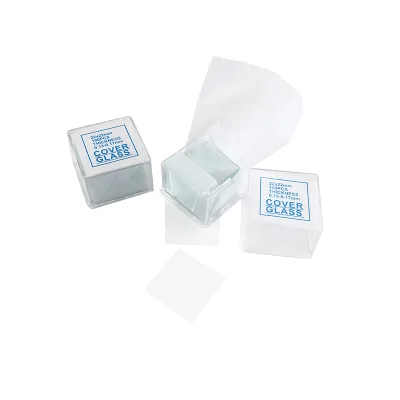


$0.10 - $0.30
Moq: 5000


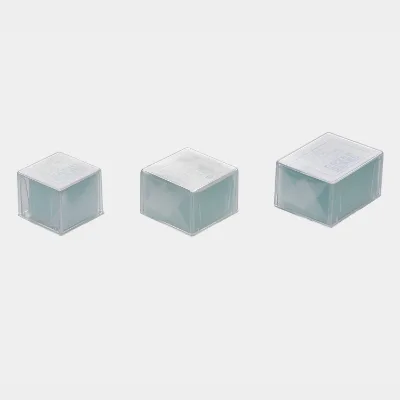

Comprehensive Sourcing Guide
Strategic Sourcing Guide for Class I Disposable Glass Coverslips
Understanding Product Classifications and Material Integrity
When sourcing Class I disposable glass coverslips, the primary objective is to secure optical-grade materials that ensure high clarity and structural consistency for microscopic analysis. The term "Class I" in laboratory consumables typically denotes a standard grade of glass suitable for general laboratory applications, including cell culture, histology, and chemical analysis, where extreme precision is required but not necessarily for high-vacuum or specialized electron microscopy. The material composition is a critical differentiator; while many modern alternatives utilize polystyrene or plastic, the core requirement for glass coverslips involves the use of high-quality silica-based glass.
Based on available market data, the material profile for these items often lists "Glass" as the primary composition, ensuring the necessary refractive index and chemical resistance. However, buyers must exercise caution when reviewing product listings, as some entries may conflate glass coverslips with plastic serological pipettes or other laboratory consumables. The distinction is vital because glass offers superior thermal stability and chemical inertness compared to plastic. The observed product attributes indicate that the material is often described simply as "Glass," with specific references to "clear" or "transparent" finishes. This transparency is essential for light microscopy, where light transmission must be maximized to prevent image distortion.
The physical dimensions of the coverslips are equally critical. The standard sizes observed in the market include 18x18 mm and 22x22 mm, with variations extending to 24x24 mm and 24x60 mm for specialized applications. These dimensions correspond to standard microscope slide formats, ensuring compatibility with automated staining machines and standard microscope stages. The thickness of the glass, often standardized at 0.13-0.16 mm for No. 1 coverslips, is a parameter that buyers must verify against their specific optical requirements. While the provided data mentions a "18mm" standard, it is the buyer's responsibility to confirm the exact thickness tolerance, as this directly impacts the working distance of high-magnification objectives.
Compliance, Certification, and Regulatory Standards
In the B2B procurement of laboratory consumables, compliance with international safety and quality standards is non-negotiable. The sourcing process must prioritize suppliers who can provide verifiable documentation regarding product certifications. The market data indicates that products in this category frequently carry "CE" certification, which signifies conformity with health, safety, and environmental protection standards for products sold within the European Economic Area. Additionally, "RoHS" (Restriction of Hazardous Substances) and "ISO" certifications are observed, suggesting that the manufacturing processes adhere to strict environmental and quality management protocols.
Buyers should not assume that every listed product automatically satisfies all regulatory requirements. The presence of a "CE" mark in a product description is an observation that requires validation through the supplier's official documentation. For Class I disposable glass coverslips, the absence of endotoxins is a critical compliance factor, particularly for applications involving cell culture and medical diagnostics. The product attributes mention "No Endotoxin" as a specific feature for certain serological pipettes, and this standard of purity should be expected for glass coverslips used in sterile environments.
The "ISO" certification mentioned in the context likely refers to ISO 9001 for quality management systems, ensuring that the manufacturer maintains consistent production standards. However, specific standards for glass quality, such as ISO 13485 for medical devices, should be explicitly requested if the coverslips are intended for medical or clinical use. Buyers must verify that the "Disposable" attribute aligns with the intended single-use protocol to prevent cross-contamination. The "Sterile" designation is another key compliance point; products described as "Individually Wrapped Sterile Laboratory" or "Serological Pipette Sterile" imply a sterile barrier packaging system, which is essential for maintaining the integrity of the glass surface prior to use.
Cost Drivers and Pricing Dynamics
The pricing structure for Class I disposable glass coverslips is influenced by several variables, including material quality, packaging density, and order volume. The observed price range in the market spans from $0 to $1.30 USD, a wide variance that reflects differences in unit specifications, packaging configurations, and supplier positioning. This low price point suggests that the product is a high-volume commodity item, where economies of scale play a significant role in determining the final cost.
The "MOQ" (Minimum Order Quantity) range observed is extensive, spanning from 1 to 200,000 units. This flexibility allows buyers to procure small trial batches or large-scale inventory with varying cost implications. Typically, the unit price decreases as the order quantity increases, a standard practice in B2B manufacturing. The "Selling Units" attribute indicates that products are often sold as single items or in bulk packs, which affects the per-unit calculation. Buyers should be aware that the "100PCS/Bag, 3bags/Box, 6boxes/Case" packaging configuration is common, and the cost per unit will differ significantly between buying a single bag versus a full case.
Other cost drivers include the "Customization" availability and "OEM" (Original Equipment Manufacturer) support. Products offering custom sizes, such as the "1818, 2222" or larger dimensions, may incur a premium over standard sizes. The "Production Time" of 15-25 days, depending on quantity, also impacts the total cost of ownership when factoring in inventory holding costs and supply chain lead times. The "Delivery Time" of 4-8 working days by express shipping adds another layer of cost, particularly for urgent orders. Buyers must balance the trade-off between immediate availability and the lower unit costs associated with longer lead times and larger order volumes.
Technical Specifications and Application Versatility
The technical specifications of Class I disposable glass coverslips dictate their suitability for various laboratory applications. The primary application areas identified include "Chemical, Scientific, Medical, School, and Beauty" sectors, with a specific emphasis on "Laboratory, School, and Hospital" environments. The "Graduation" attribute, described as "Clear Graduated," is more commonly associated with serological pipettes, but for coverslips, the focus is on optical clarity and surface flatness. The "Color" attribute, often listed as "Clear" or "Transparent," is fundamental for light transmission in microscopy.
The "Usage" of these coverslips extends to "Microscope Slide" preparation and "Cell Culture Slides." The "Frosted" option mentioned in the product attributes provides an alternative for applications requiring a non-reflective surface or a specific area for labeling. The "Polishing" attribute indicates that the glass edges are treated to prevent cuts and ensure a smooth finish, which is crucial for handling and optical performance. The "Cleaning" attribute, noted as "Free Cleaning," suggests that the products are pre-cleaned to remove dust and particulates, a vital feature for high-resolution imaging.
The "Volume" specifications, such as "7101, 7102, 7105, 7107, 7109," likely refer to specific product codes or size designations rather than liquid volume, as coverslips are solid glass. However, the "Regular Size" list of "1ml, 2ml, 5ml, 10ml, 25ml, 50ml, 100ml" in the data appears to refer to serological pipettes, highlighting the importance of distinguishing between different product types within the same category. For coverslips, the focus remains on the physical dimensions (18x18, 22x22, etc.) and the thickness. The "Power Source" being "Manual" confirms that these are passive laboratory tools requiring no external energy, relying on the user's technique for application.
Supplier Evaluation and Sourcing Strategy
Evaluating suppliers for Class I disposable glass coverslips requires a rigorous assessment of their production capabilities, quality control measures, and logistical reliability. The "Place of Origin" is consistently listed as "China," which is a major hub for laboratory consumable manufacturing. The "Loading Port" is frequently identified as "Shanghai, China," indicating a well-established logistics network for international shipping. Buyers should verify the supplier's capacity to handle the "Complex" quantity requirements and their ability to maintain consistent quality across large batches.
The "OEM" and "Customization" attributes are key indicators of a supplier's flexibility. Suppliers offering "OEM" support can tailor packaging, labeling, and even product dimensions to meet specific buyer requirements. The "Sample Policy" of "Within 5PCS Free" is a valuable resource for buyers to evaluate product quality before committing to a large order. This policy allows for a practical assessment of the glass clarity, edge finish, and packaging integrity.
When selecting a supplier, buyers should prioritize those who demonstrate transparency in their certification status and production standards. The "Certification" attributes of "CE, RoHS, ISO" should be backed by valid certificates. The "Warranty" of "3 Years" is an unusual claim for disposable items and may refer to the supplier's guarantee against manufacturing defects or the shelf-life of the product. Buyers should clarify the scope of this warranty to ensure it aligns with their expectations. The "Stock" status of "in Stock" is a significant advantage for buyers requiring immediate delivery, reducing the risk of supply chain disruptions.
Quality Control and Long-Term Procurement Considerations
Maintaining high quality in the procurement of disposable glass coverslips involves implementing robust quality control (QC) protocols. The "Disposable" nature of the product means that QC must focus on the initial manufacturing process, including the cleaning, sterilization, and packaging stages. The "Individual Paper Plastic Package" ensures that each coverslip remains sterile until the point of use, preventing contamination from dust or handling. The "100PCS/Bag, 3bags/Box, 6boxes/Case" packaging structure must be inspected for integrity to ensure that the sterile barrier is not compromised during transit.
Long-term procurement considerations include the stability of the supply chain and the consistency of product performance. The "Production Time" of 15-25 days suggests that buyers should plan their inventory levels carefully to avoid stockouts. The "Delivery Time" of 4-8 working days by express shipping provides a buffer for urgent needs, but relying solely on express shipping can be cost-prohibitive for regular replenishment. Buyers should establish a relationship with suppliers who can offer consistent lead times and reliable stock availability.
The "Standard" attribute of "18mm" and "Regular Size + Custom Service" indicates that suppliers should be able to accommodate both standard and specialized orders. Buyers should verify that the "Standard" dimensions meet the specific requirements of their laboratory equipment. The "Model Number" and "Prod Model" (e.g., "AYCG", "NBC001818-2450") serve as unique identifiers for tracking and reordering. Maintaining a consistent order of the same model number ensures that the product specifications remain unchanged, which is critical for experimental reproducibility.
In conclusion, sourcing Class I disposable glass coverslips requires a balanced approach that considers material integrity, regulatory compliance, cost efficiency, and supplier reliability. By leveraging the observed market data and applying rigorous evaluation criteria, buyers can secure high-quality products that meet the demanding standards of modern laboratory research. The focus should remain on verifying the specific attributes of each product listing, ensuring that the "Glass" material, "Sterile" status, and "Clear" optical properties align with the intended application. Through careful supplier selection and quality control, organizations can ensure a steady supply of reliable laboratory consumables that support their scientific and medical objectives.
FAQs
What certifications do these glass coverslips have?
The products hold CE, RoHS, and ISO certifications. These marks indicate compliance with safety and quality standards for laboratory use, though buyers should verify specific certificates with the supplier before ordering.
Which sizes are available for these coverslips?
Available sizes include 18x18 mm, 22x22 mm, 24x24 mm, and 24x60 mm. Buyers can also request custom dimensions through the available OEM support to meet specific laboratory requirements.
How long is the production time for orders?
Production time ranges from 15 to 25 days depending on the quantity ordered. Express delivery for the finished goods typically takes 4 to 8 working days after production is complete.
Can I get samples before placing a bulk order?
Yes, samples are available with a policy allowing up to 5 pieces for free. This allows buyers to verify the glass clarity, graduation, and packaging quality before committing to a larger purchase.
What is the minimum order quantity for these items?
The minimum order quantity ranges from 1 to 200,000 units depending on the supplier configuration. This flexibility supports both small trial batches and large-scale industrial procurement needs.
Are these coverslips individually packaged for sterility?
Yes, they come in individual paper plastic packages to ensure sterility. The standard bulk packing involves 100 pieces per bag, with multiple bags packed into boxes and cases for efficient shipping.